How do you know when to start a new paragraph? Follow these rules:

How do you know when to start a new paragraph? Follow these rules:

Have you ever had that experience of seeing an old friend or acquaintance out of the blue, maybe in the grocery store or at the gym, and ducking before being spotted? Why do we do that? For me, there’s always the certainty that of course so-and-so won’t remember me. Nevermind that we sat next to each for three semesters and I know the name of her first pet (Ginger) and that poor Ginger was run over by my friend’s dad in their driveway. No, I am the owner of a sort of invisibility cloak.
So I’ve made it one of my goals recently to approach my life with a little more presence.
Every now and then, I feel myself gently drawn back to one of my favorite stories, Pride and Prejudice. It holds special appeal In the last lazy days of summer, when I want nothing more than to read all day, or take a walk, or sit in the sun, and by night to don a pretty dress and dance with a handsome man.
Such is my romantic view of Victorian life.
These days, being a mother requires the memory of an elephant—and the thick skin of one too. Thanks to a recent scene with my 15-year-old son, I won’t soon forget that most of us are simply lumbering our way through parenthood, and life.
While my son was at school I was supposed to drop his laptop off at his dad’s house, but I was engrossed in listening to a book-on-tape while driving across town, and it completely slipped my mind.
I’m not proud of the fact that there are unwashed dishes in my sink, a pile of unfolded laundry on my bed, or a family of dust bunnies under my dresser. But I’m writing. And when my writing time increases, my usually high cleaning standards take a dramatic fall.
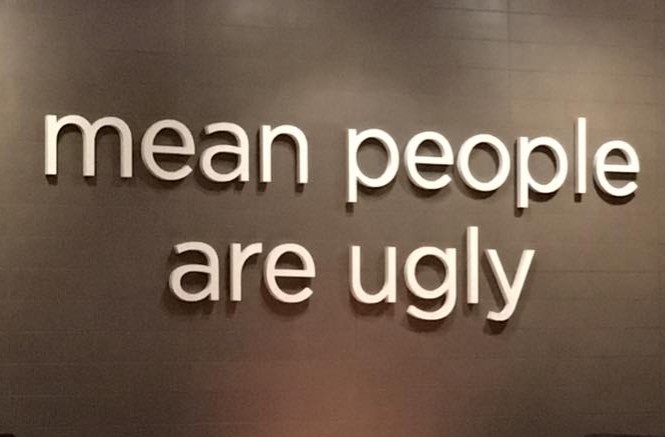
No one likes mean people. But they can be especially damaging to us sensitive souls, introverts, empaths, healers—all those whoo-whoo types who are part of a group we call Lightworkers.
Why? Because in our eagerness to see the light in everyone, and to choose to see others’ ugliness as a mirror of our own unconsciousness, we too often reduce ourselves to doormats. When you’re wired to think out of the box, boundaries don’t come easily.

Whew! What a roller coaster 2016 has been. From the World Series to the presidential election, I’ve had my share of late nights, nail biting, close calls, celebration, and despair.
During Game 7, in the bottom of the third inning, Carlos Santana crushed a curveball to right for a single, bringing Coco Crisp home and tying the game for the Cubs. And millions of hearts pounded.
I’ll never forget the day, many years ago, when I discovered the benefits of “scripting” life’s difficult moments. My kids went to school some distance away. A friend told me that one of our neighbors was going to ask me to carpool with her and I didn’t want to. I was worried about being steam-rolled into an arrangement that, in my gut, I knew would include a lot of drama. But what would I say? What reason could I give?
My friend fed me the perfect line. She told me to say, “I just can’t. I’ve got a lot on my plate right now.”
This week I’ve been preparing to talk to health care practitioners at a nursing event about the benefits of journaling. I wanted to share the same information here, most of which is gleaned from a wonderful book called “Writing Down Your Soul,” by Janet Conner.
Why is journaling such a valuable activity?